
Current trends in the Cyprus real estate market


Content
Cyprus real estate investment in 2026 is supported by two important market indicators: increasing transaction volumes and rising residential prices. Eurostat recorded a 13.6% annual increase in home sales in Cyprus during the first quarter of 2026, while the Central Bank of Cyprus reported annual residential price growth of 7.5%. For investors considering property in Larnaca, Limassol, Paphos or Nicosia, the figures point to an active market with continuing demand and meaningful capital-growth potential.
| +13.6% | +7.5% | +10.8% |
| ANNUAL HOME-SALES GROWTH | ANNUAL RESIDENTIAL PRICE GROWTH | ANNUAL APARTMENT PRICE GROWTH |
| Highest increase among the 16 EU countries reporting Q1 2026 data. | Cyprus’s national Residential Property Price Index accelerated in Q1 2026. | Apartments remained the strongest-performing residential segment in Q1 2026. |
Eurostat reported that the number of dwellings sold in Cyprus increased by 13.6% in the first quarter of 2026 compared with the same quarter of 2025. This was the highest annual increase among the 16 EU countries for which quarterly transaction data were available. Denmark followed with growth of 8.4%.
For a property investor, rising transaction volumes are significant because they indicate market activity, buyer confidence and liquidity. A liquid market generally gives an owner more options when planning a future resale, although the outcome of any individual investment will still depend on the location, property type, purchase price and market conditions at the time of exit.
Cyprus property prices rose by 7.5% in Q1 2026
The latest Central Bank of Cyprus Residential Property Price Index confirms that higher sales activity has been accompanied by continuing price appreciation. Residential property prices increased by 7.5% year-on-year in the first quarter of 2026, compared with 7.1% in the fourth quarter of 2025. On a quarterly basis, the national index rose by 2.3%.
Apartments substantially outperformed houses. Apartment prices increased by 10.8% annually, while house prices rose by 3.0%. This makes apartments especially relevant for Cyprus real estate investment strategies focused on urban professionals, international employees, relocating families, students and long-term tenants.
Property-price performance varies by district, making location selection one of the most important investment decisions. In Q1 2026, annual apartment-price growth reached 11.7% in Larnaca and 10.7% in Limassol. Paphos recorded growth of 6.4%, while Nicosia recorded 3.0%.
| District | Annual apartment-price growth | Investment perspective |
| Larnaca | 11.7% | Strong price momentum and growing interest in coastal and urban locations. |
| Limassol | 10.7% | Largest-value urban market, supported by international business and rental demand. |
| Paphos | 6.4% | Positive growth with lifestyle, retirement and overseas-buyer appeal. |
| Nicosia | 3.0% | More moderate growth, with demand linked to employment, education and domestic residents. |
The overall residential price indices also increased by 9.1% in Limassol, 8.9% in Larnaca and 6.4% in Paphos.
These figures do not mean that every development or neighbourhood will perform equally. Investors should compare price per square metre, construction quality, accessibility, rental demand, developer track record and competing supply before committing funds.
Foreign buyers continue to strengthen demand
The Central Bank of Cyprus identifies demand from foreign purchasers, together with domestic demand, as a major factor supporting the residential property market. Registered sale contracts for all property types increased by 13.8% in Q1 2026, from 4,137 to 4,709. Transactions involving foreign buyers increased by 22.3%, compared with growth of 8.1% among domestic buyers.
The positive trend was already visible in 2025. The Cyprus Department of Lands and Surveys recorded 18,114 sale contracts in 2025, compared with 15,797 in 2024 — an increase of approximately 15%. Larnaca recorded 3,978 contracts, up 19%, while Limassol remained the country’s largest district market with 5,563 contracts.
Buying or Investing: What’s the Real Difference?
Why invest in Cyprus real estate in 2026?
The official data provide a constructive basis for investors evaluating Cyprus property. The market combines rising prices, increasing transaction volumes, strong foreign-buyer participation and demand across several distinct districts. Key considerations include:
- Capital-growth potential: Residential prices increased by 7.5% annually, while apartment prices rose by 10.8%.
- Active property market: Cyprus recorded the strongest Q1 2026 home-sales growth among the EU countries reporting quarterly data.
- International demand: Transactions involving foreign buyers increased by 22.3% year-on-year in Q1 2026.
- Strong coastal locations: Larnaca and Limassol recorded double-digit annual apartment-price growth.
- Rental-market relevance: Apartments in well-connected urban and coastal areas may appeal to professionals, relocating families, students and long-term tenants.
- Residency planning: A qualifying new-property purchase may also be considered within a Cyprus permanent-residence strategy, subject to the applicable legal, income and investment criteria.
Where to invest in Cyprus property
Larnaca real estate investment
Larnaca recorded the highest annual apartment-price growth among the districts covered above, at 11.7%. The city may appeal to investors looking for a combination of coastal living, airport access, expanding residential areas and a market that remains more accessible than some prime Limassol locations. Particular attention should be paid to neighbourhood-level supply, proximity to the sea and infrastructure, and realistic long-term rental demand.
Why Larnaca Is Becoming One of Cyprus’ Most Attractive Cities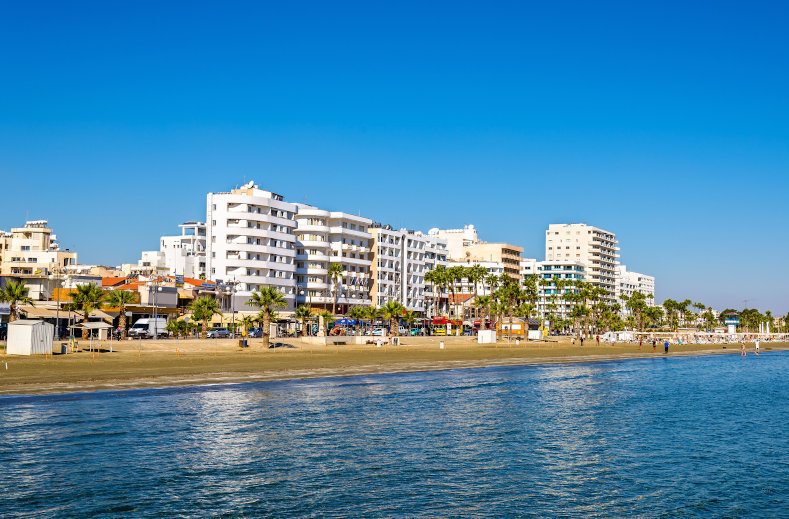
Limassol property investment
Limassol remains Cyprus’s principal international business centre and the largest district market by number of sale contracts in 2025. Annual apartment-price growth reached 10.7% in Q1 2026. The city can offer strong rental demand, but entry prices may be higher; therefore, yield calculations and comparison of new-build premiums are essential.
Paphos and Nicosia property opportunities
Paphos continues to attract lifestyle buyers, retirees and international purchasers, with annual apartment-price growth of 6.4%. Nicosia recorded more moderate apartment-price growth of 3.0%, but its market is supported by government, corporate, university and domestic residential demand. The most appropriate district depends on whether the investor prioritises capital appreciation, rental yield, personal use, residency planning or a future resale.
How to invest in Cyprus property safely
- Define the investment objective. Decide whether the priority is rental income, capital growth, personal use, permanent residence or a combination of these goals.
- Compare the complete acquisition cost. Assess the purchase price together with VAT, transfer fees where applicable, legal costs, financing, furnishing and ongoing ownership expenses.
- Conduct independent legal due diligence. Verify ownership, title status, planning and building permits, mortgages, encumbrances, developer obligations and the contractual protections available to the buyer.
- Review the commercial fundamentals. Analyse price per square metre, comparable transactions, expected rent, vacancy risk, service charges, competing supply and a realistic exit strategy.
- Structure the purchase correctly. Consider whether the property should be acquired personally or through an appropriate entity, taking account of tax residence, financing, succession and asset-protection objectives.
- Coordinate any residency application. Where the acquisition forms part of a Cyprus permanent-residence plan, confirm eligibility and documentary requirements before selecting or paying for the property.

Book a consultation


Are Cyprus property prices rising in 2026?
Yes. According to the Central Bank of Cyprus, the national Residential Property Price Index increased by 7.5% annually in Q1 2026. Apartment prices rose by 10.8%, while house prices increased by 3.0%.
Which Cyprus property type is showing the strongest price growth?
Apartments were the strongest residential segment in Q1 2026, with annual price growth of 10.8%. They may also offer broader rental demand in urban and coastal districts.
Which Cyprus districts recorded the strongest apartment-price growth?
Larnaca recorded annual apartment-price growth of 11.7%, followed by Limassol at 10.7%, Paphos at 6.4% and Nicosia at 3.0%.
Author
Contact us
For enquiries please fill in the form below. Our consultants will contact you with the details.
Griva Digeni 49, Chrystalla Court 1st Floor Office 11, 6036 Larnaca, Cyprus
11B Lyuteranska St., off. 23, 01024