
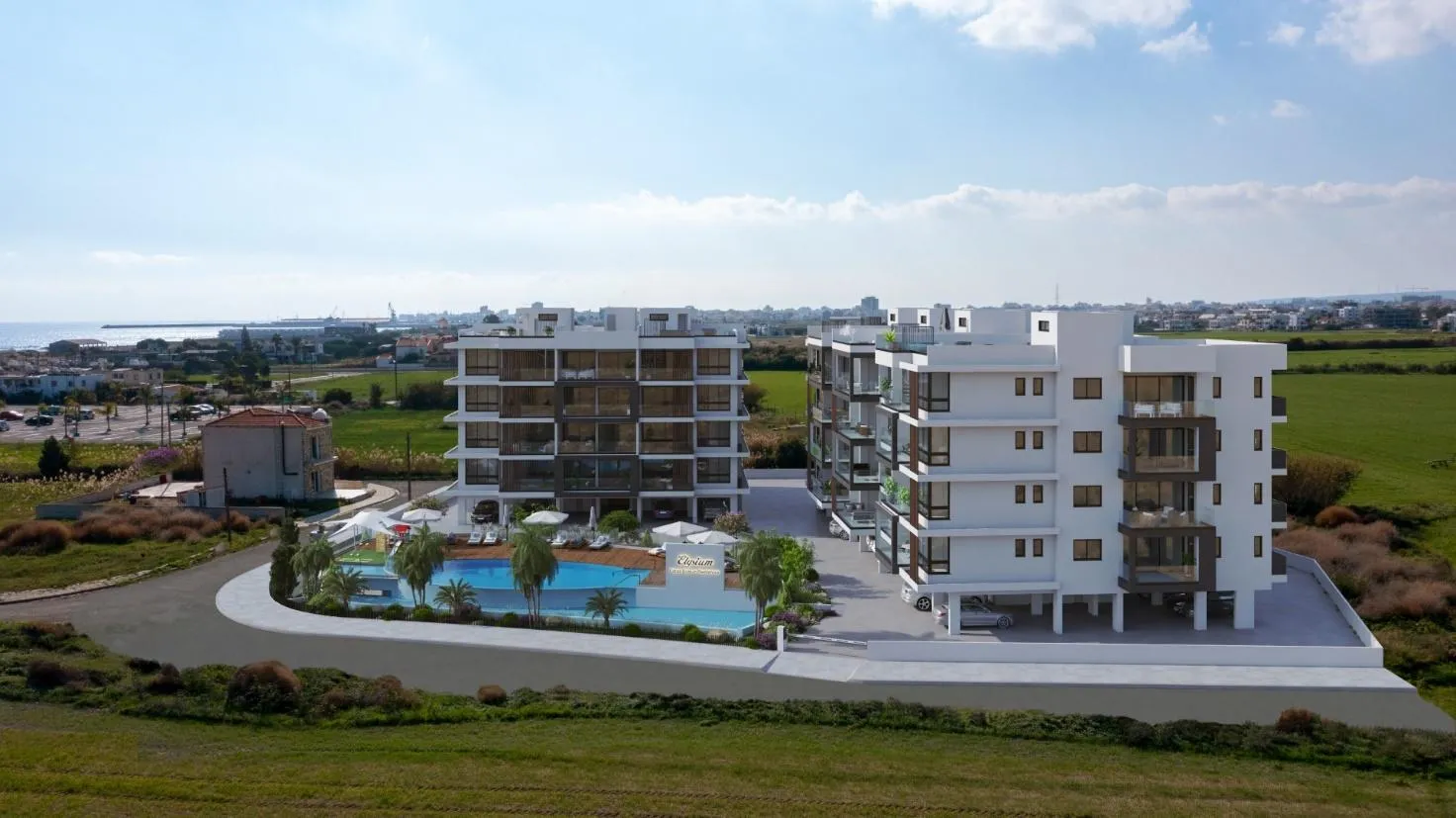
Content
Purchasing property in Cyprus from a developer at the project stage (off-plan) is a common and well-established practice in the primary market. Moreover, it is precisely at the early stages of sales that buyers obtain the most favorable terms and maximum investment potential.
What Does “Off-Plan Property” Mean in Cyprus?
Off-plan property in Cyprus refers to the acquisition of a property during the construction phase or even before construction has commenced. It involves purchasing real estate that is in the design stage or currently under development.
An investor commits funds to a project for which architectural plans, layouts, technical specifications, and the overall concept of the complex have already been developed and approved. However, at the time of purchase, the building itself has not yet been completed, and in some cases construction is only preparing to begin.
Purchasing property during the construction phase has become widespread in Cyprus due to high demand and limited supply of ready-to-deliver properties. In an active market environment, many projects are sold out even before construction is completed.
Advantages of Buying Property at the Project Stage
In the primary Cyprus real estate market, early-stage sales provide buyers with the best conditions and maximum choice:
- a better price compared to later stages,
- a wide selection of layouts, views and floors,
- the ability to lock in the price before market growth,
- high capital appreciation potential — often from +15% to +25% by the time the project is completed,
- a flexible payment schedule tied to construction stages.
This is why most investors and families choosing property in Cyprus consider purchasing at the project stage to be a strategically sound decision.
What Is Already Prepared at the Project’s Sales Launch Stage?
By the time a project is launched for sale, the developer typically already has:
- architectural drawings,
- a feasibility study outlining profitability and financial projections,
- 3D visualizations, renderings, and marketing materials,
- a preliminary construction schedule.
At the same time, the land plot itself may appear empty, and construction works may not yet have started or may still be in the preparatory phase. In Cyprus, this is normal practice and does not indicate developer unreliability.
Checklist for Buying Property from a Developer in Cyprus
Buying property “off-plan” requires a detailed review of the project, the plot, permits and the contract. At this stage, a professional legal due diligence of Cyprus property is essential: from land status and the presence of Planning and Building Permits to the correctness of the Sale and Purchase Agreement and the future issuance of Title Deeds (individual ownership documents).
1. Availability of Permits (Planning Permit & Building Permit)
There are situations when a client visits the plot with an agent, receives presentations and a commercial offer, signs a reservation agreement and pays a deposit. Then after a month, they pay 30–40% under the main sale agreement. But six months later, they visit the site and see that construction has not started. The question arises: “Why?” In most cases, the reason is that the project is at the permit-approval stage.
At the early sales stage, developers usually have:
- Planning Permit — may still be under review. It is a municipal permission regarding the project parameters (number of floors, density, parking, infrastructure). It confirms that the project can be built in the proposed form.
- Building Permit — in preparation or pending submission/approval.
- And sometimes the developer has not submitted the documents yet because the plot has encumbrances or unresolved issues.
This is a key point. What matters is not whether construction has begun, but the status and timing of the documentation. The permits determine when construction can realistically start and whether it will match what is presented in the marketing materials. This is normal practice, but it must be properly assessed.
2. Legal due diligence of the plot
This is also one of the most important stages before signing the agreement. The due diligence shows: whether there is a mortgage on the land, whether there are court prohibitions or encumbrances, who the actual owner is. Sometimes the land belongs to one person while the project is implemented by another — so it is important to understand the legal link between them.
3. The Sale Agreement must reflect early-stage specifics
Once the main Sale and Purchase Agreement is registered with the Land Registry, it becomes a legally binding document. If questions, delays or discrepancies arise after signing, your lawyer can influence the situation only through negotiations with the developer.
The contract must clearly and in detail specify:
- deadlines for the start and completion of construction,
- payment stages,
- procedure for interaction with the developer,
- actions if deadlines change,
- responsibilities of both parties.
Developers often use a standard template that lacks important buyer-focused clauses. This is not due to bad faith — it is simply a basic document that requires additional provisions. Legal review ensures that the property sale agreement reflects a fair balance between both parties.
4. Transparency of documentation and openness of the developer
A reliable developer is always ready to provide copies of required documents, architectural plans, technical specifications and construction schedules. If the developer is open, this is the best indicator of reliability. We request the full documentation package and prepare a professional report so that the client understands the project in detail.
5. Analysis of the developer’s completed projects
To ensure confidence, it is useful to study the developer’s track record:
- which projects have already been built,
- whether they were delivered on time,
- whether they received the Final Completion Certificate,
- whether individual Title Deeds were issued,
- how the company communicates with clients and whether it provides ongoing support.
This analysis helps to understand the developer’s work style and the real quality of their projects.
Buying Property in Cyprus: Why You Need a Lawyer and What They Check?
Feod Group Recommendations for Buying Off-Plan Property in Cyprus
Buying off-plan in Cyprus is profitable and completely safe when supported by professional legal due diligence. Before signing any agreement or transferring funds, Feod Group lawyers always request and verify:
✔️ Land Registry Search — verification of encumbrances, mortgages, liens and prohibitions.
✔️ Title Deed / Title of the plot — confirmation that the land belongs to the person selling the property.
✔️ Planning & Building Permits (or submission confirmation) — understanding the stage of the permits and what can legally be built.
✔️ Feasibility & previous developer projects — analysis of timelines, construction quality and reputation.
✔️ Full legal review of the agreement — the contract must contain refund conditions, clear deadlines, payment mechanisms, and liability of the parties.
✔️ Review of the developer’s financial model — understanding whether construction is financed from developer’s funds or from buyers’ payments.
Feod Group lawyers help clients go through every stage calmly and confidently: from checking the land and permits to negotiating the sale agreement and communicating with the developer.
We speak your language, understand local realities, and work exclusively in your interests. Consultations are available online and in Larnaca and Limassol.
With us, you receive full end-to-end support!
Book a consultation


Author

Contact us
For enquiries please fill in the form below. Our consultants will contact you with the details.
Griva Digeni 49, Chrystalla Court 1st Floor Office 11, 6036 Larnaca, Cyprus
11B Lyuteranska St., off. 23, 01024